Table of Contents
- Why Saved Vehicle Reports Matter for Auction Buyers
- What a Trade Account Helps You Keep Together
- Step 1: Sign In Before Running Checks You Want Saved
- Step 2: Check Each Auction Vehicle Before You Bid
- Step 3: Keep Your Own Auction and Stock References
- Using Bundles and Trade Pricing
- How to Handle Outstanding Finance Before an Auction Purchase
- Remember That a Saved Report Is a Point-in-Time Record
- Common Mistakes to Avoid
- Conclusion
- Frequently Asked Questions
Last Updated: 20 September 2026
Why Saved Vehicle Reports Matter for Auction Buyers
Auction buying moves quickly. Several vehicles may be considered in one session, and it is easy to lose track of which registration was checked, what the report showed and which vehicle was eventually purchased.
Keeping eligible purchased vehicle reports together in a Car Check Scotland account gives you a record you can return to later. That can be useful when reviewing a vehicle before resale, comparing several potential purchases or checking what information was recorded on the day you ran the report.
A saved report should be treated as a point-in-time record. It does not continually refresh itself when MOT, tax, finance or other vehicle data changes. If current information matters later, run a fresh check.
Key Takeaway
For auction buying, the useful workflow is simple: identify the vehicle, run the check, review any warnings before bidding, and keep your own record of the auction date and lot or stock reference alongside the saved report.
What a Trade Account Helps You Keep Together
Car Check Scotland accounts can provide access to eligible reports purchased while using the account. Eligible motor-trade customers can also apply for trade access and use the trade pricing or bundle options currently offered by Car Check Scotland.
An account can therefore help you keep vehicle checks associated with the same login rather than relying only on screenshots, browser history or downloaded files.
It is important not to overstate what the dashboard does. Your own business records should still capture information such as:
- auction house;
- auction date;
- lot number;
- internal stock number;
- purchase price;
- who authorised the purchase; and
- any follow-up required after the history check.
Do not assume the Car Check Scotland dashboard provides custom auction-lot tagging, staff-level audit trails or a full stock-management system unless those features are specifically shown in the current product.
Step 1: Sign In Before Running Checks You Want Saved
If you want a purchased report associated with your account, sign in before completing the purchase.
Guest checkout is also available on Car Check Scotland, but a guest purchase should not be treated as though it will automatically appear inside a trade account later unless the current service specifically links it.
Before a live auction session:
- confirm that you can sign in;
- make sure the email address on the account is current;
- check that the correct trade access is active if you rely on trade pricing;
- review the current report or bundle options; and
- make sure the person carrying out the checks knows which account should be used.
For account security, avoid casually sharing passwords across a team. If several staff members need access, use whatever account or staff-access arrangement the service currently supports and keep separate internal records of who performed each check.
Step 2: Check Each Auction Vehicle Before You Bid
For each vehicle you are seriously considering:
- confirm the registration number against the vehicle or auction listing;
- run the appropriate vehicle history check;
- read the report rather than relying only on a green or clear summary;
- investigate any finance, write-off, stolen-vehicle or mileage warning;
- compare the report with the auction listing and available documents; and
- keep the report and your own lot or stock reference together.
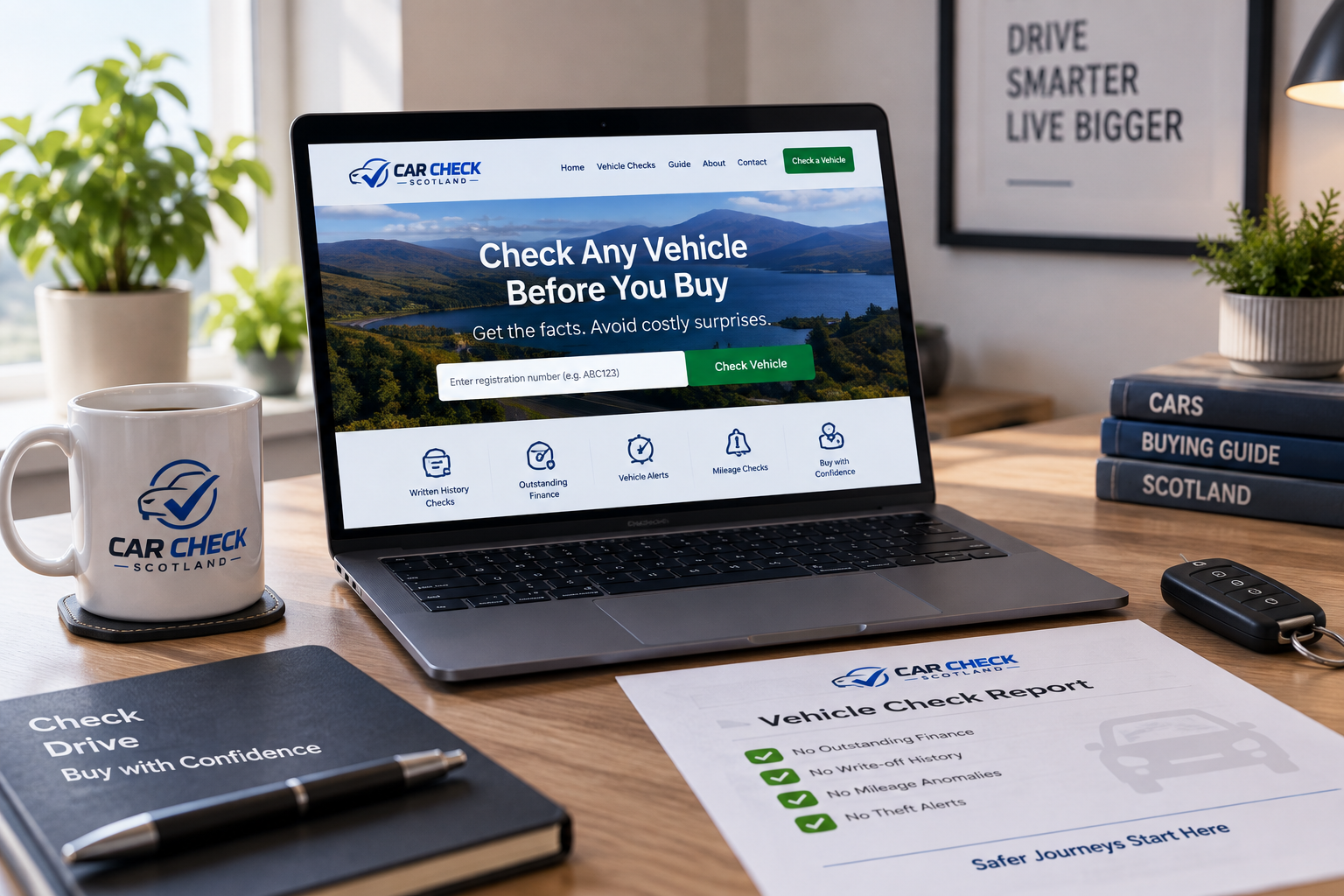
A vehicle history report is one part of auction due diligence. It does not physically inspect the car and cannot identify every mechanical fault, unreported repair or event that has not yet reached the data sources searched.
Step 3: Keep Your Own Auction and Stock References
Do not rely on the report dashboard alone to act as an auction-management system.
A simple internal record can link:
- registration number;
- auction house;
- sale date;
- lot number;
- internal stock number; and
- the date the vehicle history check was run.
That makes it much easier to find the correct saved report later, particularly where the same vehicle appears at more than one sale or where several similar vehicles are being considered.
If your business has more than one buyer, use one consistent internal process rather than depending on individual phones, screenshots or personal notes.
Using Bundles and Trade Pricing
Car Check Scotland offers account and bundle options for customers carrying out multiple checks, with separate trade access for eligible motor-trade customers.
The exact products and prices can change, so use the current Trade Checks and Bundles pages rather than relying on an old article for a permanent price.
A bundle can be useful when you know you will carry out several checks, but a bundle should not encourage unnecessary repeat checks. Keep a record of which vehicle each credit was used for and run a fresh check when you genuinely need current information.
How to Handle Outstanding Finance Before an Auction Purchase
Outstanding finance deserves particular attention before bidding.
If a report shows recorded finance, do not assume that the auction house, seller or previous keeper will automatically resolve it after the sale. Ask for the position to be clarified and obtain appropriate written evidence where possible before committing funds.
The legal position differs depending on the finance agreement and the circumstances of the purchase. Citizens Advice Scotland explains that a private buyer can sometimes obtain good title to a vehicle that was still subject to hire purchase or conditional sale if specific conditions are met.
That private-buyer protection should not be casually applied to a motor trader buying vehicles for resale. Citizens Advice defines a private buyer for this purpose as someone who does not buy cars to sell or hire them on.
Useful guidance:
Watch Out
If recorded finance is unresolved, do not rely on a verbal promise that it will be “sorted later”. Establish the position before bidding or paying, and obtain legal or professional advice if ownership or title is uncertain.
Remember That a Saved Report Is a Point-in-Time Record
A saved history report records the information returned when the check was carried out.
It should not be described as a live file that automatically updates whenever something changes. For example:
- a later MOT will not rewrite the old report;
- finance could be settled after the original check;
- a new finance agreement or other record could appear after the check; and
- tax or other vehicle information can change.
If you checked a vehicle days or weeks before the auction and current status is important, consider running a fresh check close to the purchase.
The same principle applies when a vehicle is later resold. A report from the acquisition date can be useful as part of the stock record, but it is not a substitute for checking current information where current information matters.
Common Mistakes to Avoid
Auction buyers can reduce avoidable problems by not:
- assuming a saved report continually updates itself;
- relying on screenshots without recording the registration and auction reference;
- assuming a guest purchase will automatically be attached to a trade account;
- sharing one password casually across several staff members;
- treating a condition report as a substitute for a vehicle history check;
- treating a vehicle history check as a substitute for a physical inspection;
- ignoring a finance warning because the bid price looks attractive; or
- relying on an old report when a fresh check is needed.
Conclusion
Saved vehicle reports are useful for auction and trade buyers because they create a record of what was checked and what the data showed at that time.
The safest workflow is to sign in before purchasing reports you want associated with the account, keep your own auction and stock references, review every warning before bidding and run a fresh check when you need current information.
Car Check Scotland provides Basic and Full vehicle history checks, together with bundle options and trade access for eligible motor-trade customers. Guest checkout remains available for customers who do not want to create or use an account.
Frequently Asked Questions
Can I keep previously purchased vehicle reports in my Car Check Scotland account?
Eligible reports purchased while using your account can be kept together for later access. If keeping a report in your account is important, sign in before purchase. Guest checkout is available separately and should not be assumed to attach a report to a trade account later unless the current service specifically provides that function.
Does a saved report update automatically when the vehicle's history changes?
No. Treat a saved report as a point-in-time record of the information returned when the check was run. If you need the current position later, run a fresh check.
Can I organise saved reports by auction lot number inside the account?
Do not assume the dashboard provides custom auction-lot or stock-number tagging unless that feature is currently shown in the service. Keep your own business record linking the registration number to the auction house, date, lot number and stock reference.
Should a motor trader use one shared password for every member of staff?
Casual password sharing is not a good account-security practice. Use the access arrangements currently supported by the service and keep your own internal record of who carried out each check.
What should I do if an auction vehicle shows outstanding finance?
Investigate it before bidding or paying. Ask for appropriate written confirmation about the finance position and do not rely solely on a verbal assurance. The good-title protections described by Citizens Advice Scotland for some private buyers should not automatically be assumed to protect a motor trader buying vehicles for resale.
Are bundles available for customers carrying out several checks?
Car Check Scotland offers bundle options, and eligible motor-trade customers can apply for trade access. Check the current Trade Checks and Bundles pages for the products and prices available at the time you buy.