Table of Contents
- What Does a Vehicle History Report Actually Cover?
- The Real Cost of Skipping a Vehicle History Check
- How to Check if a Car Has Outstanding Finance
- Insurance Write-Off Categories Explained
- When Is a Report Worth the Money?
- Your Used Car Buying Checklist
- The Verdict: Is It Worth the Cost?
Last Updated: September 5, 2026
A used car can have recorded history that is not obvious from a viewing alone. A vehicle history report can bring together information such as recorded finance, insurance write-off history, mileage and MOT data to help identify issues worth investigating before purchase. This review examines what a vehicle history report can add to the buying process, what its limitations are and when paying for one may be worthwhile.
For many used-car purchases, the relatively small cost of a vehicle history report can be worthwhile because it can add recorded information that is not available from free government checks alone. Below, we look at what these reports can cover, the risks they may help identify and the situations where paying for additional data can be useful.
What Does a Vehicle History Report Actually Cover?
A vehicle history report is a consolidated data file that reveals important events linked to a specific registration number. Vehicle history services can combine registration, MOT, insurance, finance and other third-party vehicle data to give buyers additional recorded information about a car's past.
The core data sections typically include:
- Outstanding finance: Alerts you to recorded finance that should be investigated before purchase, as a finance company may still have rights in the vehicle depending on the agreement and circumstances
- Insurance write-off history: Shows recorded insurance write-off information and the category returned where available
- Stolen vehicle checks: Shows the stolen-vehicle result returned by the data sources checked
- Mileage history: Shows recorded readings to help spot potential clocking
- MOT and tax information: Shows MOT status and expiry information, plus the current vehicle tax or SORN status
A common question is whether this duplicates the free government services. The DVLA vehicle enquiry service tells you the tax status and current MOT expiry date, while the MOT history service shows past test results and recorded mileages. Those free tools do not provide the same recorded finance, insurance write-off or stolen-vehicle information available from commercial vehicle-history checks, so buyers wanting those additional checks need another source.
The Real Cost of Skipping a Vehicle History Check
Skipping a check can turn a bargain into a financial headache. Outstanding finance is one of the most serious risks: depending on the type of finance agreement and the circumstances of the sale, a finance company may still have rights in the vehicle. Private buyers can have statutory protection in some situations, but the legal position can be fact-specific, so identifying recorded finance before purchase is the safer course.
A similar risk applies to insurance write-offs. A previous write-off can materially affect a vehicle's history and value. Category S and N vehicles can return to the road after repair, but the write-off category alone does not confirm the quality of those repairs or the vehicle's current condition. Knowing the history lets you investigate further before paying.
The practical point is that the cost of a vehicle history report is usually small compared with the purchase price of a used car. The report should be treated as one due-diligence tool that can highlight recorded issues worth investigating before you commit.
How to Check if a Car Has Outstanding Finance
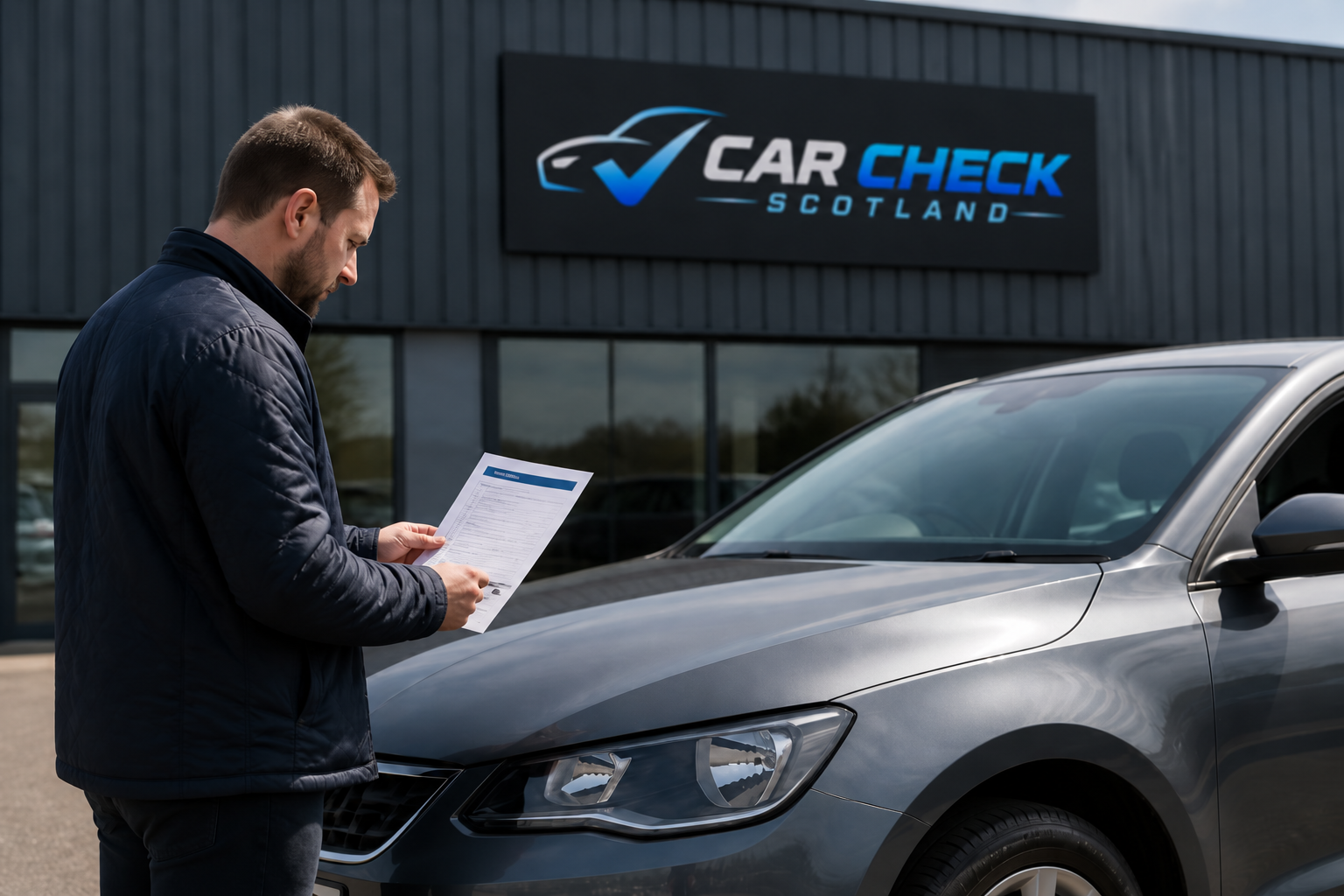
Checking for outstanding finance is an important part of buying a used car. You provide the vehicle's registration number and a history check can search relevant data sources for finance information recorded against that vehicle. Any finance result should be treated as information to investigate rather than as a legal guarantee about every possible agreement.
A vehicle history report is a practical way to check recorded finance information alongside other vehicle-history data. Before paying for a check, you can gather some context for free. The government's MOT history service shows recorded mileages and test results, which helps you assess the car's usage and MOT history before committing to a paid report.
The key point is that a free MOT check and a paid vehicle-history report answer different questions. A full history check can bring recorded finance and insurance write-off information together in one search, alongside other data that is not provided by the government's MOT history service.
Insurance Write-Off Categories Explained
Insurance write-off categories classify vehicles that insurers have written off and indicate what can happen to them afterwards. Category A vehicles must be completely destroyed, while Category B body shells must be crushed although some parts may be salvaged. Category S and N vehicles can be repaired and returned to use if they are roadworthy. Understanding the category helps you judge what further inspection may be appropriate before buying.
The current categories are:
- Category A: The vehicle must be crushed; no parts can be salvaged
- Category B: The shell must be crushed, but some parts may be salvaged
- Category S: Structural damage, but the vehicle can be repaired and returned to the road
- Category N: Non-structural damage, but the vehicle can be repaired and returned to the road
A vehicle history report can show whether a car has a recorded insurance write-off and which category was recorded. Category S or N vehicles can be repaired and used again, but the category alone does not certify repair quality or current roadworthiness. Knowing the vehicle's recorded history before you negotiate helps you decide whether further inspection is needed and whether the asking price reflects its past.
When Is a Report Worth the Money?
A vehicle history report can be particularly useful in private sales and in other situations where additional recorded history would help you assess the vehicle. The car's age, price and how you plan to use it should all factor into your decision.
A report can be especially useful in these scenarios:
- Buying from a private seller: You generally have fewer consumer protections than when buying from a trader, so independent history and identity checks are especially important
- The price seems unusually low: Compare it with similar vehicles and investigate whether condition, history, specification or seller circumstances explain the difference
- The car has a full service history: Verify the mileage against the MOT history to ensure the records are consistent
- You plan to finance the car: Existing finance or a previous write-off can affect whether a lender is willing to finance the vehicle, so check the lender's criteria before committing
A history report may be less relevant when buying a brand-new car from an authorised dealer because the used-vehicle history risks discussed in this article are generally lower. For a used car from an independent trader, a history check can still provide useful additional information, while the trader's legal obligations also provide consumer protection.
Your Used Car Buying Checklist
A vehicle history report is one part of a thorough buying process, not a substitute for it. Use this checklist to protect yourself before you hand over any money:
- Run a vehicle history check to review recorded finance, write-off and stolen-vehicle information
- Check the MOT history online to review past failures and advisories
- Verify the mileage on the odometer against the recorded MOT history
- Inspect the car in person and take it for a test drive
- Check the VIN and registration documents match the car
- Confirm the seller's identity and address before paying
- Ask to see the V5C logbook and check it is genuine
This approach combines recorded data with physical inspection and common sense. No single check can guarantee that a car is problem-free, but using several sources of information gives you a better basis for deciding whether to proceed.
The Verdict: Is It Worth the Cost?
For many used-car purchases, a vehicle history report can be a worthwhile part of due diligence. Its value comes from bringing together recorded information such as finance, write-off, stolen-vehicle and mileage history that may warrant further investigation before purchase.
Car Check Scotland provides Basic and Full vehicle history reports for UK-registered vehicles, with the exact checks shown before payment. Reports are normally generated immediately after purchase. Customers can use guest checkout without creating an account, view the report online and receive an email link back to it. A free account is optional, while trade customers can also access discounted bundle options.
Frequently Asked Questions
Q: What information is included in a comprehensive vehicle history report?
A: A full report typically checks for recorded outstanding finance, insurance write-off status, stolen vehicle records, mileage discrepancies, MOT history and status, and current vehicle tax or SORN status. Some reports also include vehicle specifications or valuation information. Exact coverage varies by provider, so check what is included before purchasing.
Q: Can I get a vehicle history report for free?
A: You can obtain useful information free from government services, including MOT history, recorded mileage and current vehicle tax or SORN status. Those government services do not provide recorded outstanding finance, insurance write-off or stolen status, so buyers wanting those additional checks will usually need a commercial vehicle-history service.
Q: What are the risks of buying a used car without a history check?
A: Risks can include undisclosed finance, a previous insurance write-off, stolen status or mileage discrepancies. Outstanding finance can lead to disputes over rights in the vehicle, although the legal position depends on the agreement and circumstances and some private buyers may have statutory protection. A recorded write-off also warrants closer inspection because the category alone does not establish the quality of any repair.
Q: How does outstanding finance affect a used car purchase?
A: If recorded outstanding finance exists, the finance company may still have rights in the vehicle depending on the type of agreement and the circumstances. Some private buyers can acquire good title in specific situations when they purchase in good faith without notice of the finance, but this is fact-specific. Checking for recorded finance before purchase gives you the opportunity to investigate and resolve the position before handing over money.
Q: What does an insurance write-off category mean for a buyer?
A: A write-off category records how an insurer classified a damaged vehicle. Category A vehicles must be completely destroyed and no parts reused. For Category B, the body shell must be crushed, although some usable parts may be salvaged. Category S vehicles have structural damage and Category N vehicles have non-structural damage; both can be repaired and returned to use if roadworthy. The category does not by itself certify the quality of the repair.
A used car purchase is a significant financial commitment, so a vehicle history report can be a useful part of the checks you make before buying. Car Check Scotland offers Basic and Full vehicle history reports, with the checks included in each report shown before payment. You can use guest checkout without creating an account, with a free account available as an optional way to keep purchased reports together.